Defense training
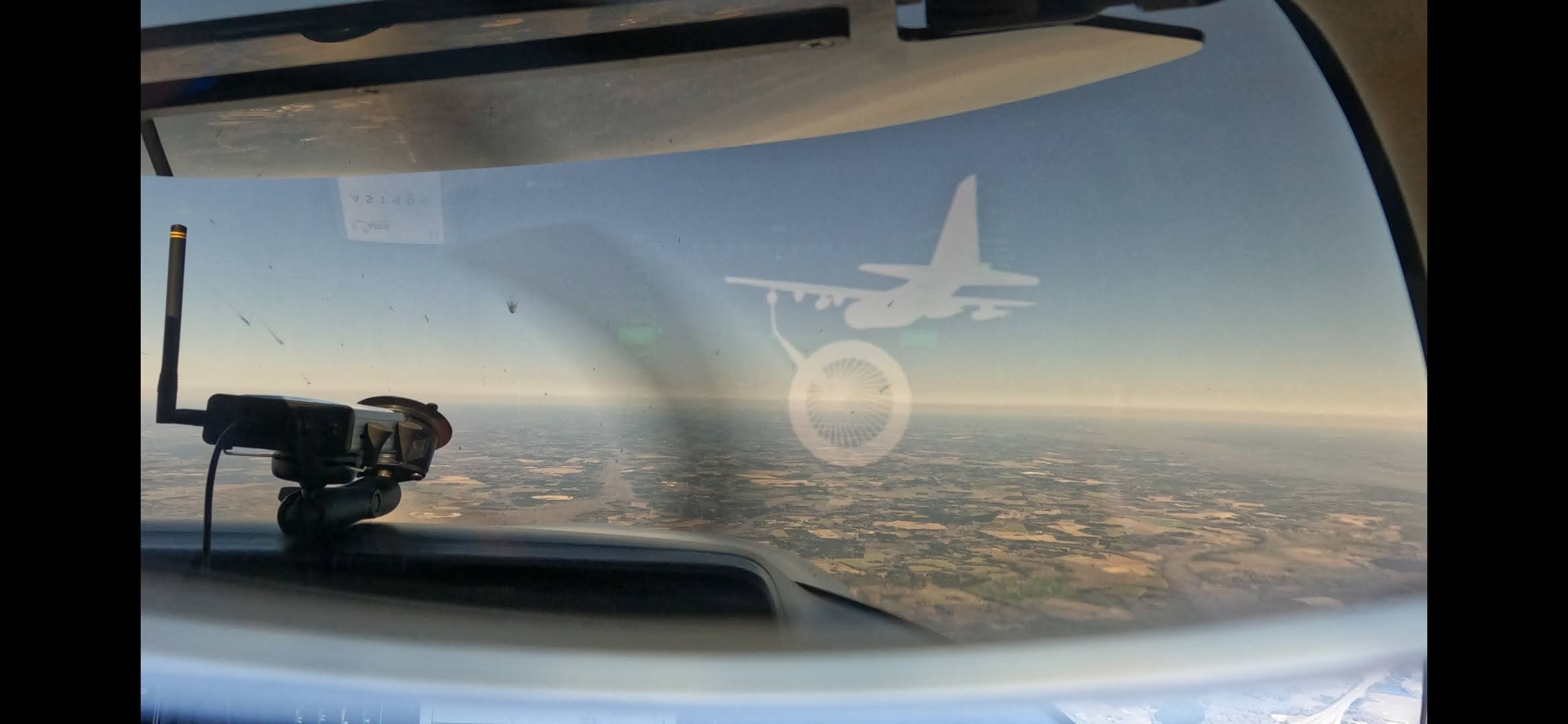
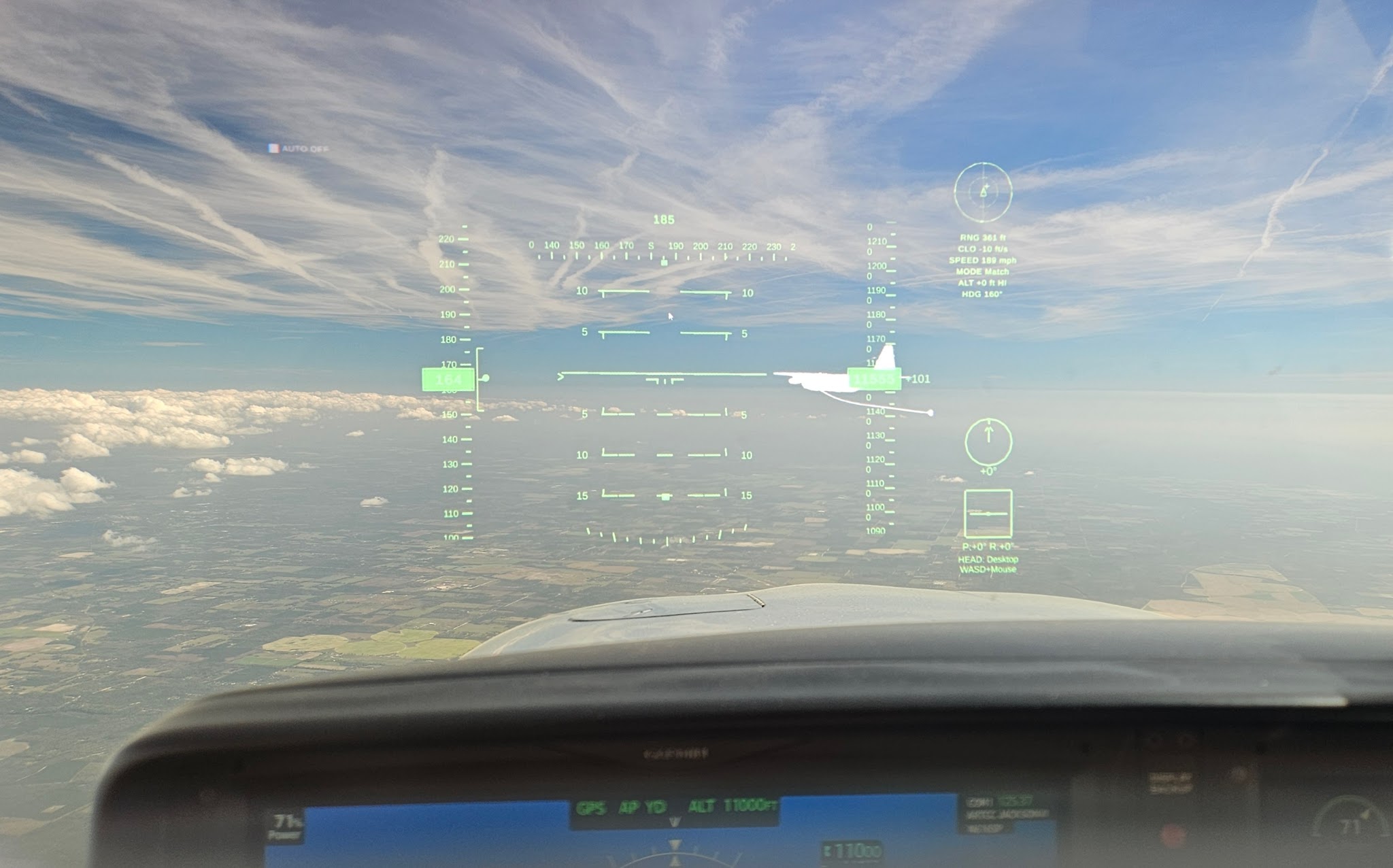
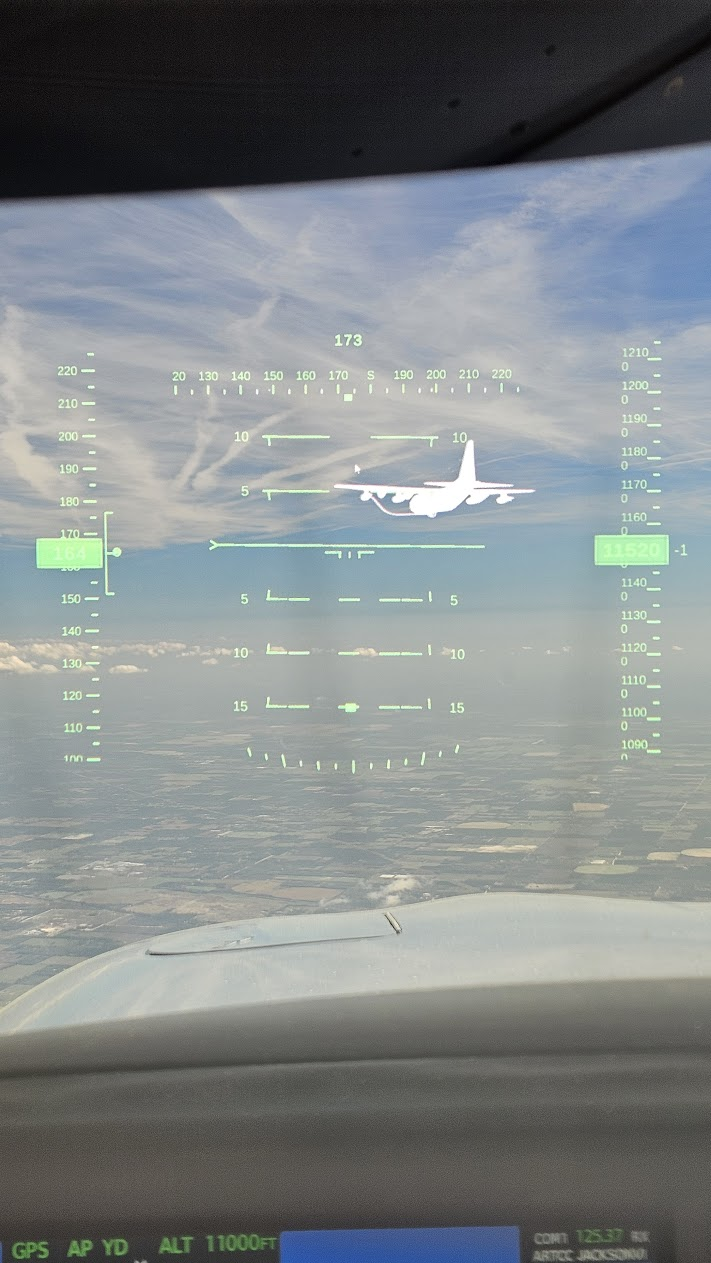
Synthetic aircraft and threats in a real cockpit. Practice formation, refueling, and mission scenarios while flying the actual aircraft.
Flight-demonstrated prototypeReal-world information.
Synthetic scenarios. Visual guidance.
An AR platform demonstrated in flight and during driving, with applications in aviation, training, and motorsport.
The opportunity
HMARD places data and virtual objects in the surrounding scene through an optical AR display. Aviation and driving demonstrations establish the foundation for further development.
Synthetic aircraft and threats in a real cockpit. Practice formation, refueling, and mission scenarios while flying the actual aircraft.
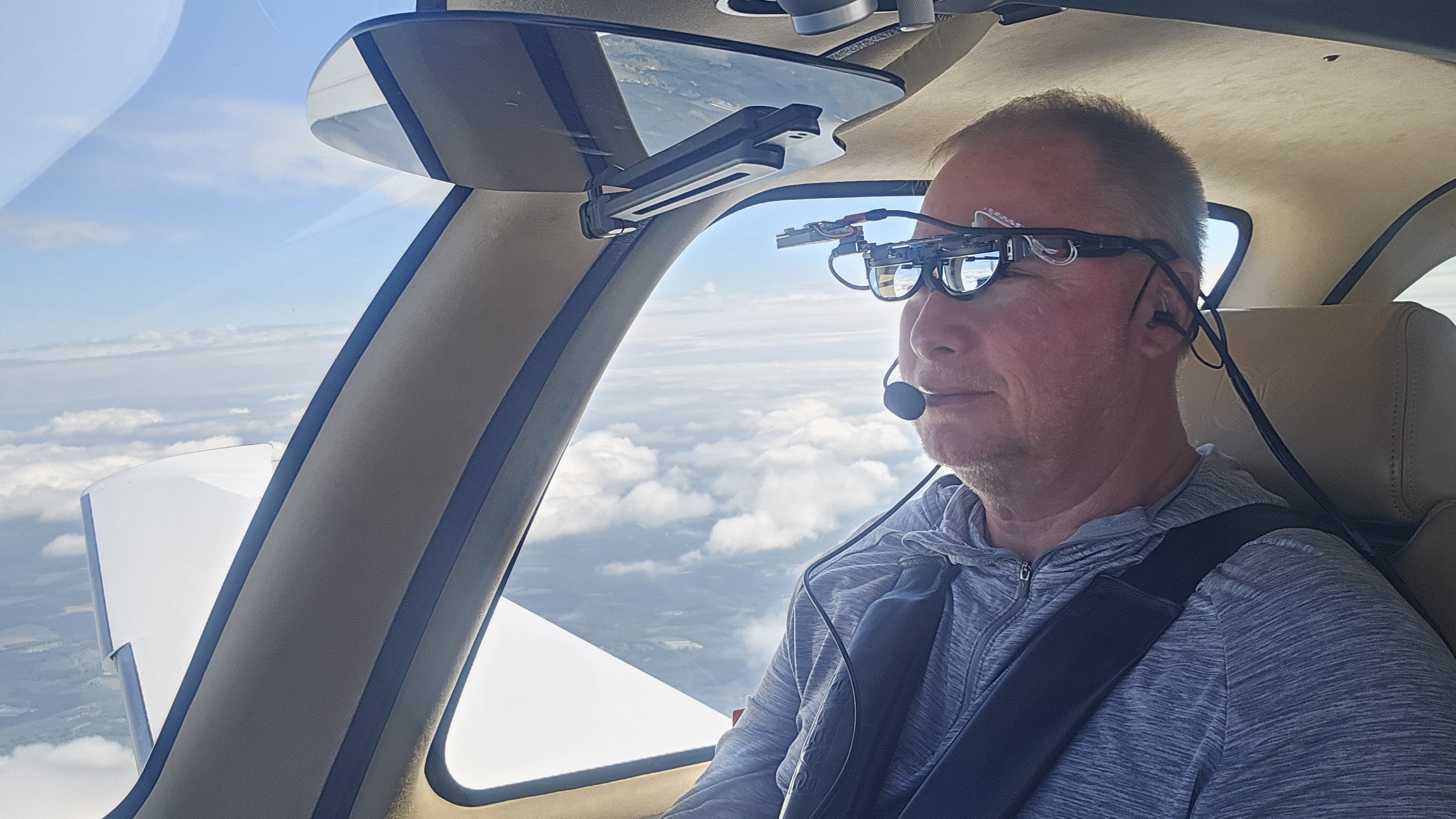
Flight-demonstrated prototypeFAA obstacle data and received ADS-B traffic placed in the pilot’s view, connecting geographic information with the outside scene.
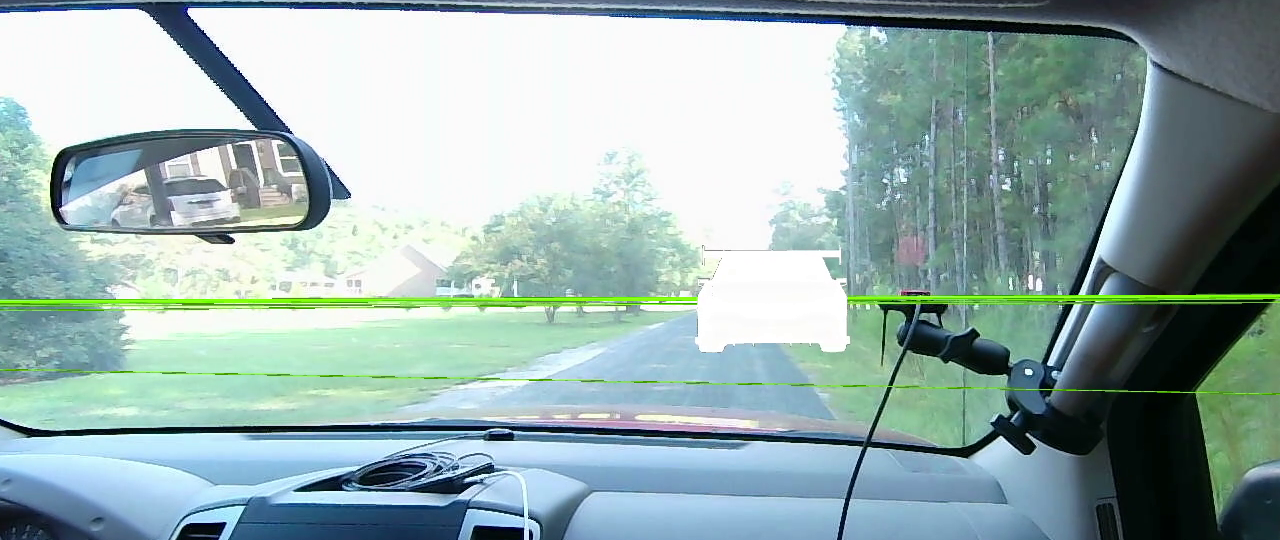
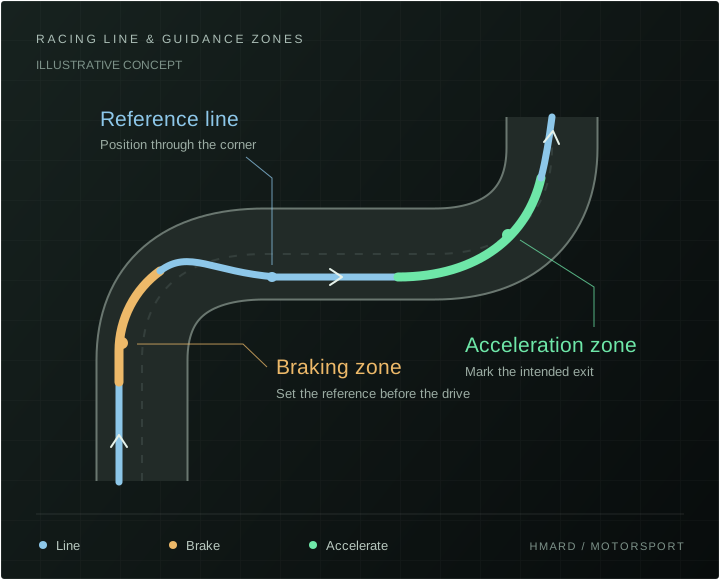
Demonstrated in flightVirtual race-car references demonstrated during driving. Develop racing lines, braking points, and acceleration zones for driver training.
Demonstrated in vehicleSeeking investment and customer partnerships to refine the platform and develop specific applications.
01 / Defense training
Live training is constrained by the aircraft, ranges, and conditions you can put in front of a crew. HMARD brings synthetic aircraft and threats into the pilot’s view while preserving the workload of the real cockpit.
Formation and aerial refueling scenarios, with air, ground, and maritime entities positioned in the surrounding environment.
Work with training units and development partners to expand mission content and evaluate it in representative flight conditions.
02 / Civilian aviation
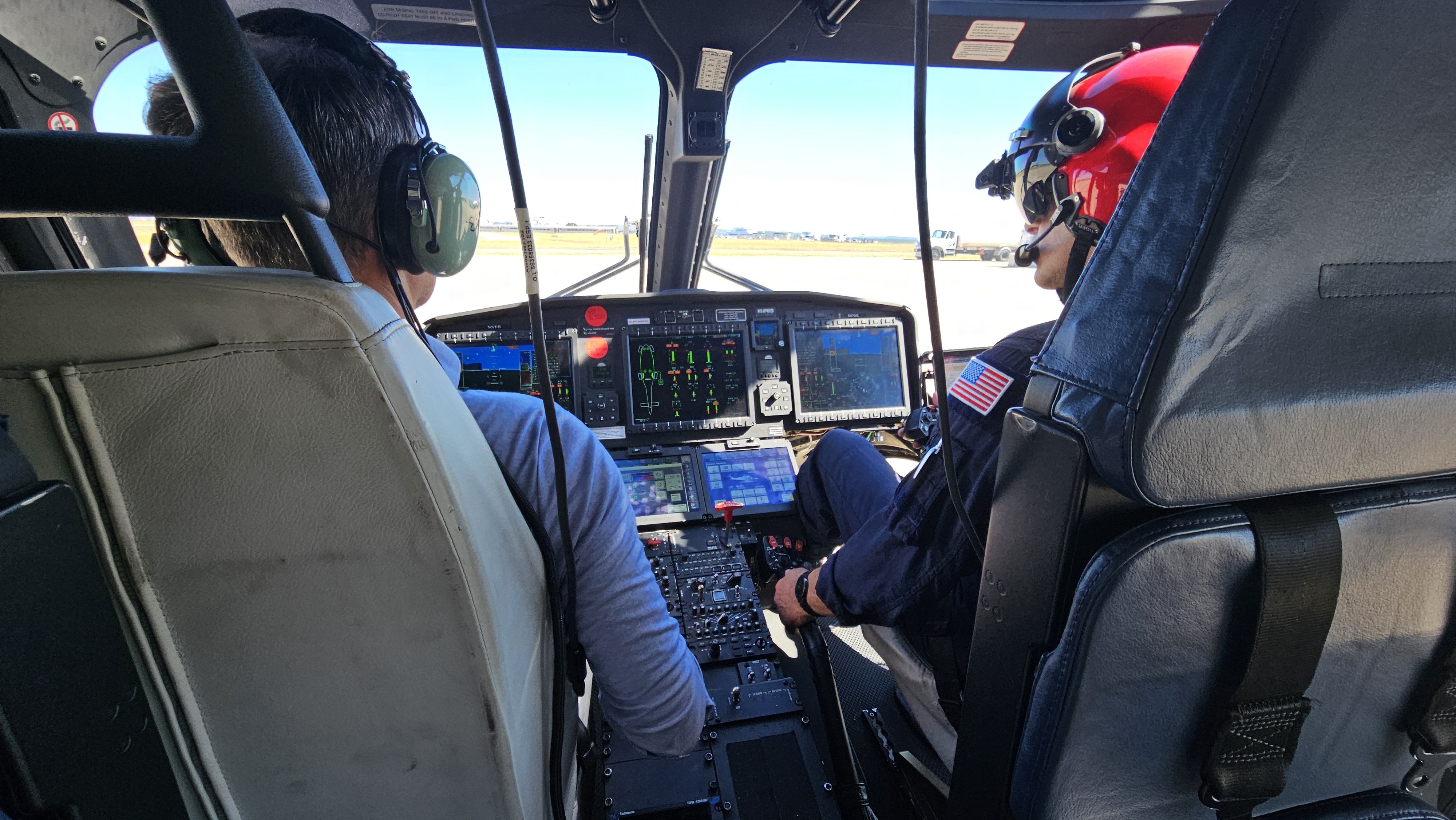
From HEMS and medevac to offshore helicopter operations, obstacle and traffic information belongs in the context of the outside world. HMARD brings that information into the pilot’s view through the AR display.
Show database-listed obstacles at their geographic locations, with display filtering and colours based on vertical clearance.
Show received traffic targets in the surrounding scene, with callsign and relative altitude information.
Both capabilities have been demonstrated in flight. HEMS, medevac, and offshore operators are potential partners for further development and evaluation.
03 / Motorsport
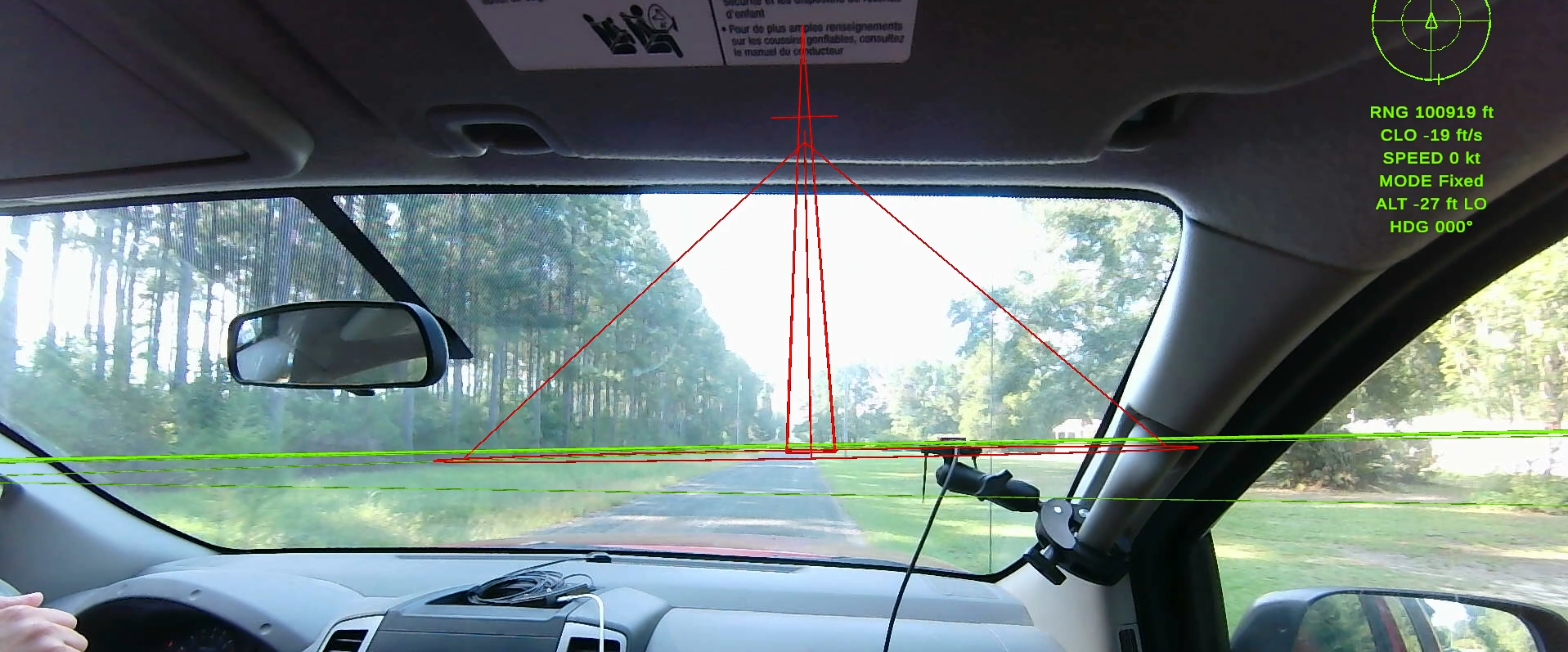
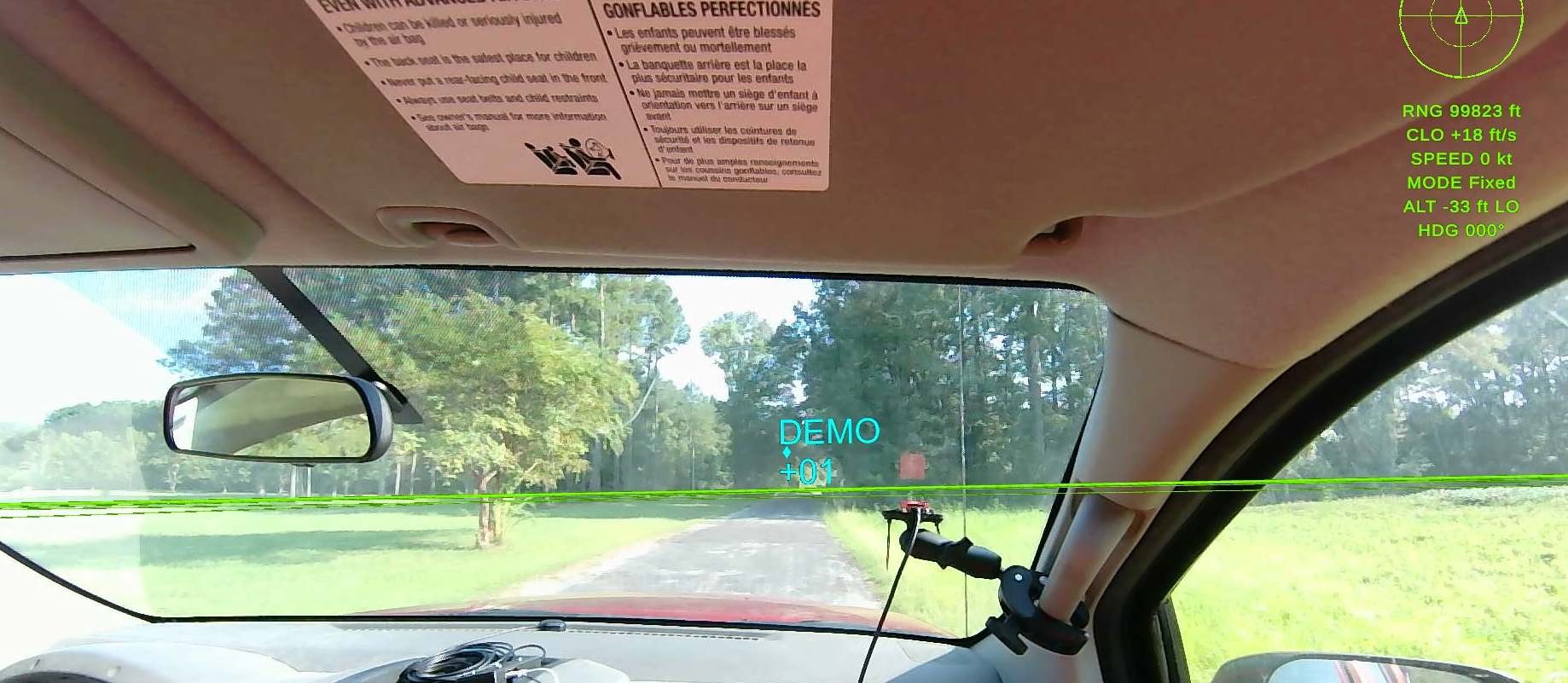
HMARD has demonstrated a virtual race car in the driver’s view during driving. The racing mode includes recording and replay, providing a working foundation for motorsport development.
The track-guidance concept extends that foundation to references prepared before a run: a racing line, braking points, and acceleration zones.
Build on the driving demonstration to refine track guidance, presentation, and driver-training scenarios with teams and instructors.
The shared technology
Head tracking, vehicle position and attitude, and an optical display provide the foundation. Data and application software determine what the operator sees.
Head and vehicle tracking place virtual objects in the surrounding scene as the operator moves and looks around.
View the outside world through the optics, with geographic information and synthetic objects added to the scene.
Combine obstacle databases and received traffic with synthetic aircraft and vehicle references. Build application-specific scenarios on the shared AR platform.
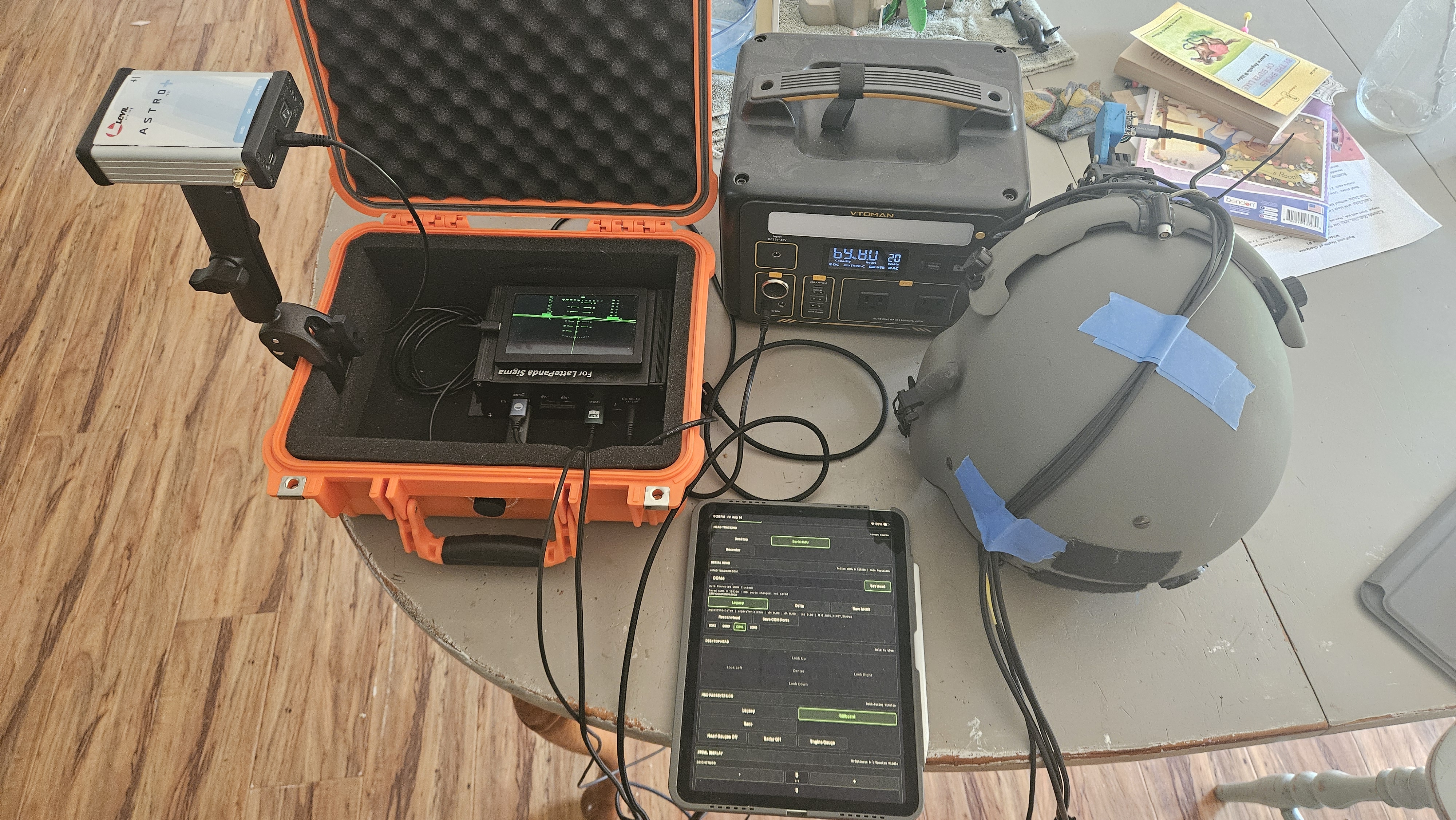
Standalone compute and tracking, with optional aircraft data inputs. A common platform for application-specific development and evaluation.
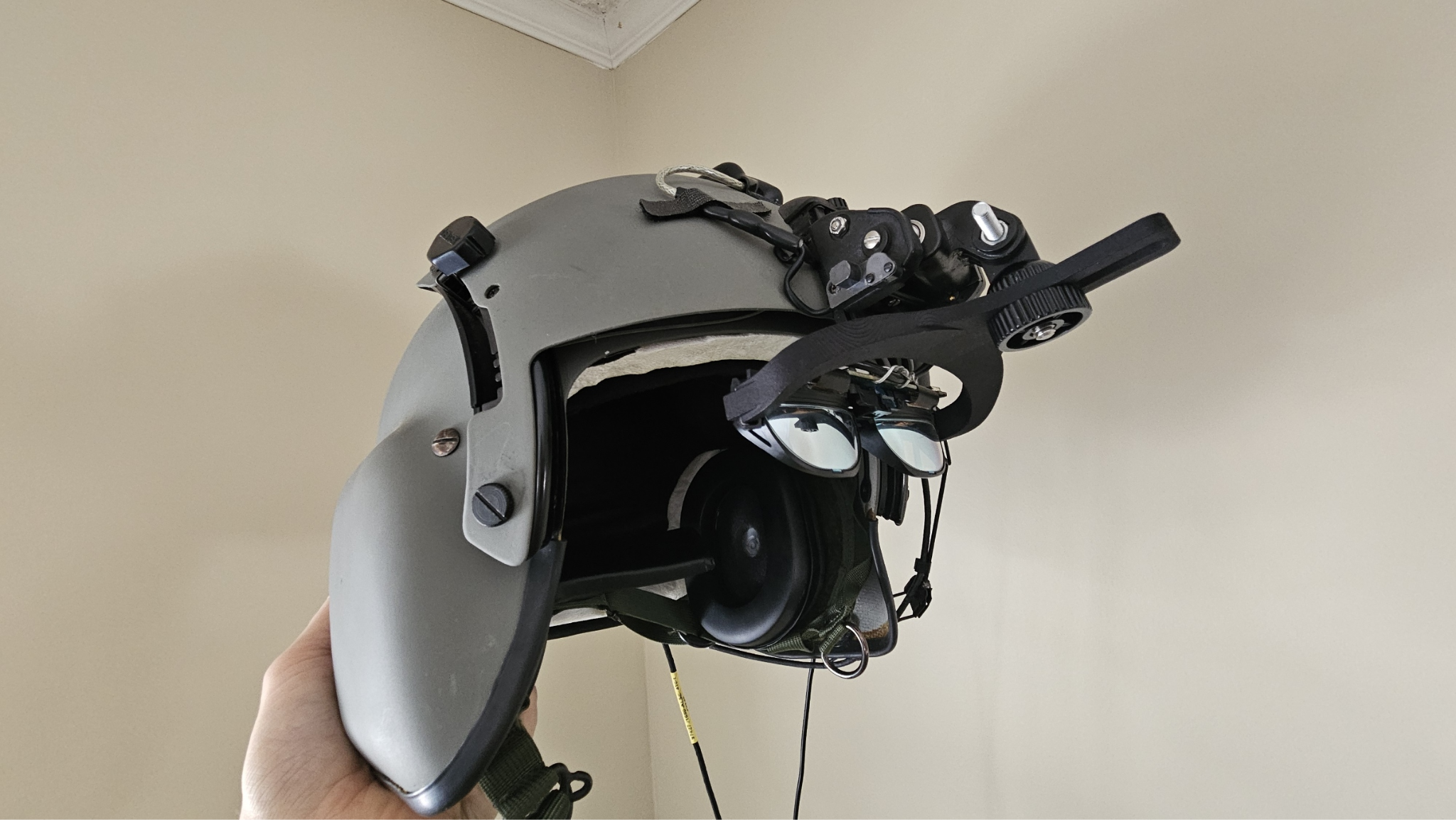
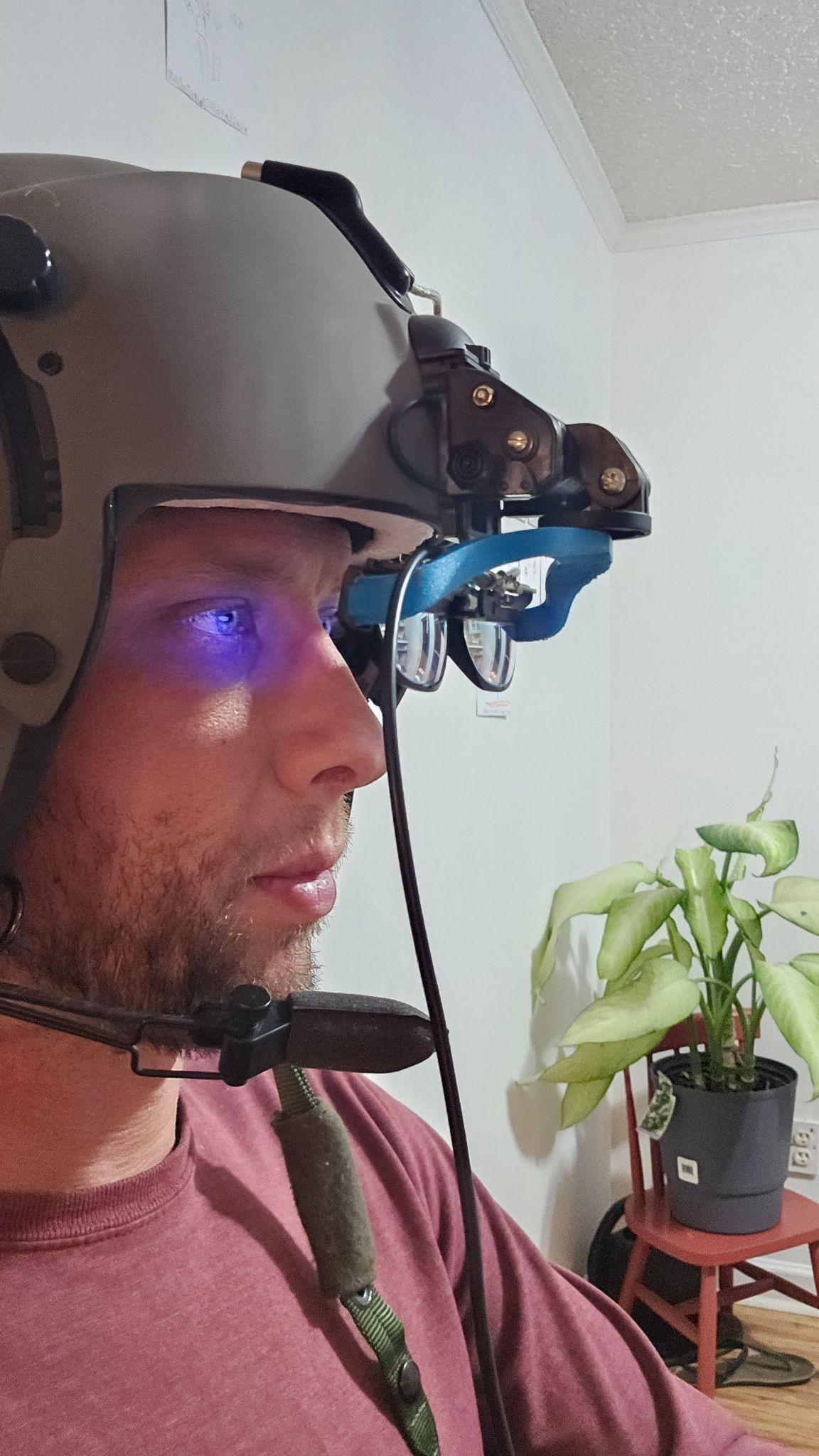
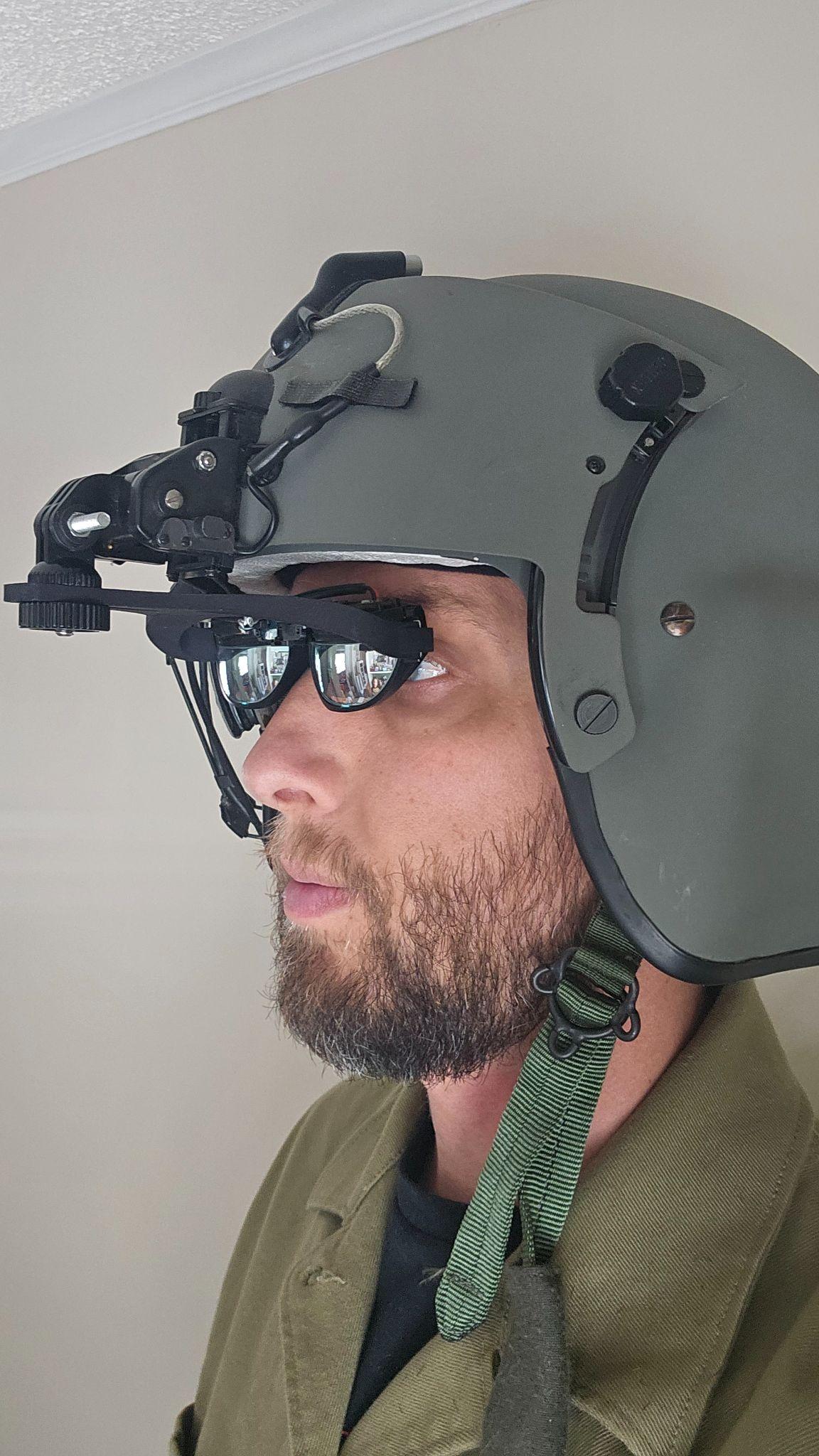
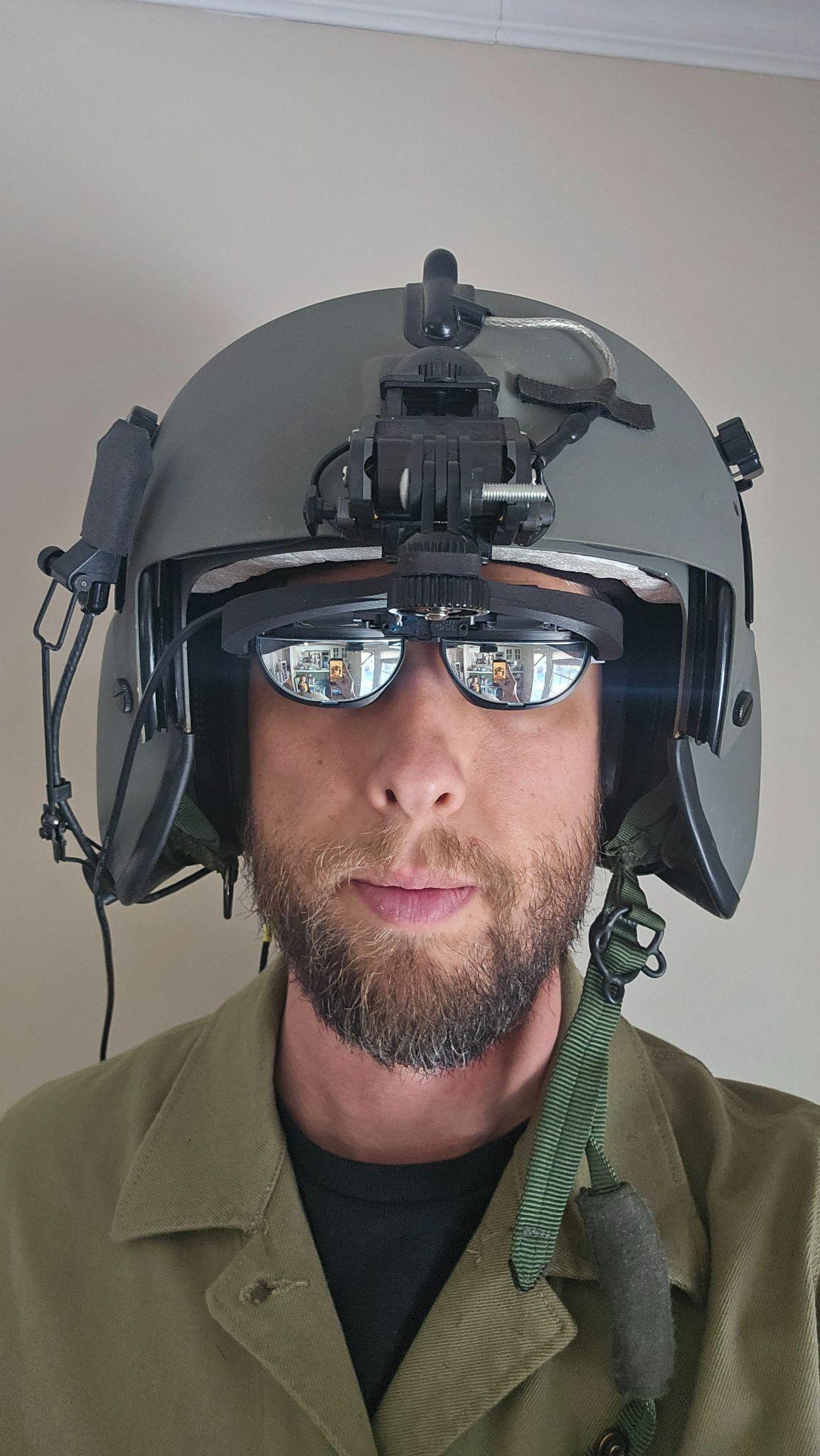
HMARD mounts to a standard HGU-56 helmet via the NVG interface — sunlight-readable optics, Polhemus-class head tracking, and a standalone compute path with optional avionics input (e.g. Garmin).
| Form Factor | HGU-56 NVG-mount compatible |
| Optics | Sunlight-readable optical AR |
| Tracking | Polhemus-class / HMCS equivalent |
| Integration | Standalone — optional avionics data |
| Flight Test | ~50 hours total across prototypes over 12 months |
| Status | Proof of concept — further development and evaluation |
Commercial opportunity
HMARD is seeking capital and development partners to turn demonstrated AR capability into systems built around specific customer needs.
Training units and test organisations: define mission scenarios, fund development, and evaluate the prototype in the intended aircraft.
Helicopter and fixed-wing operators: develop obstacle and traffic presentation around actual cockpit tasks and operating environments.
Teams, instructors, and driver-development partners: build on the driving demonstration to refine racing references and track guidance.
Fund the common hardware and software foundation, with customer projects guiding application development and validation.
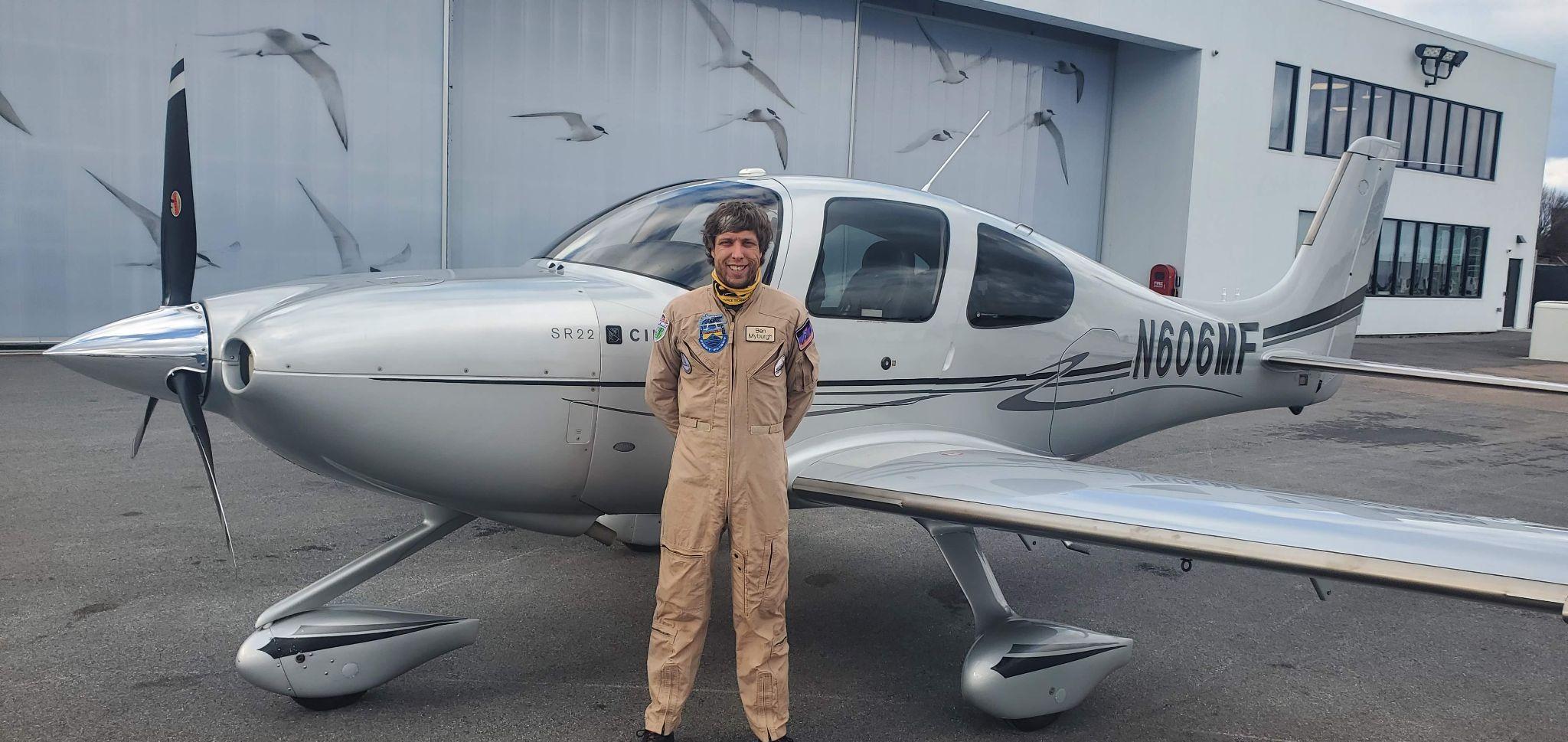
Aeromechanical engineer and commercial pilot focused on flight test and AR training systems. Leads HMARD system design and integration.
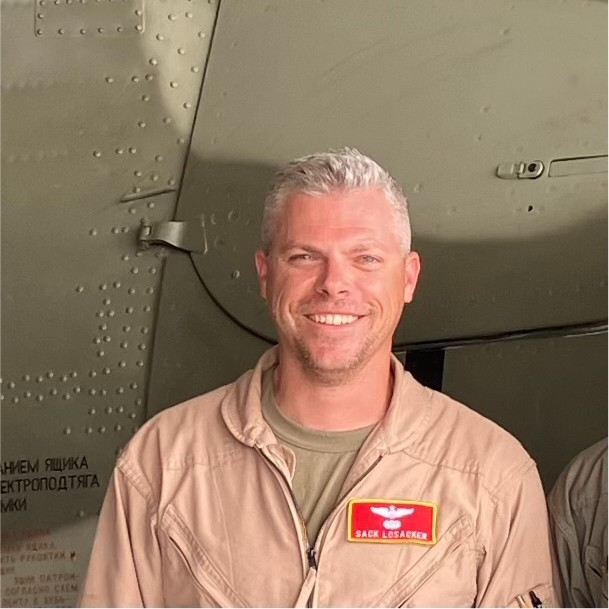
Retired U.S. Air Force combat helicopter pilot and Weapons School graduate. Provides operational validation for HMARD use in real-world missions.
Invest in the next stage
Seeking capital to advance a flight-demonstrated proof of concept through hardware refinement, application development, and customer evaluation.
Funds go to size, weight, and usability improvements; software robustness and new application content; flight and vehicle testing; and manufacturing preparation.
The next milestone: a refined prototype and repeatable demonstrations built around partner-defined use cases.
Helmet Mounted Augmented Reality Display